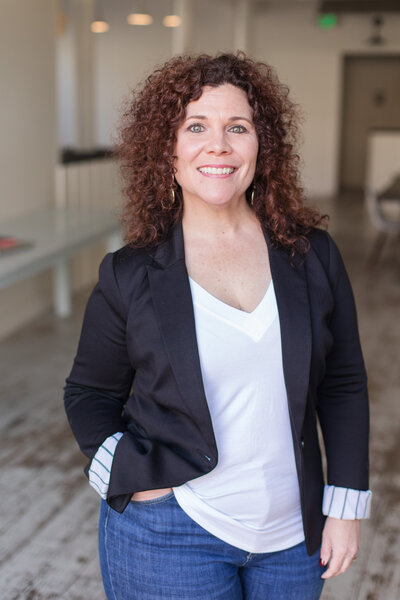



When I built my own store, I did everything. I handled the marketing, operations, hiring, bills, insurance, vendor negotiations, and just about anything else that needed to happen.
And that’s often what being a founder looks like.
You take an idea, turn it into a business, and do whatever it takes to make it successful. In those early stages, being involved in every part of the business helps you understand how everything works. You learn the systems, the processes, and what it takes to keep things moving.
But eventually, something changes.
The business grows, your team expands, and the things that once helped you build the business can become the very things holding it back. You become the ceiling because everything still depends on you.
If you want to build a business that can thrive without your daily involvement, you have to make a leadership shift.
Identify Your Next-Level Leaders
Start by looking at the people already on your team.
Who understands your vision? Who can take an idea, understand the strategy behind it, and figure out how to move it forward?
These are your next-level leaders and co-creators.
Your job is to help close the gap between what you know and what they know. That means adopting a mentor mindset and intentionally transferring the knowledge you’ve gained from building your business.
You can’t expect people to lead effectively if you’re holding onto everything they need to know.
Communicate Your Vision
Your team needs to understand where the business is going and what you’re working toward.
When you communicate the bigger vision, you give people the context they need to make decisions, contribute ideas, and take ownership of their responsibilities.
Don’t assume everyone automatically understands what you’re thinking. The more transparent you are about the direction of the business, the more effectively your team can execute.
Create a Cadence for Follow-Up
Stepping out of the middle doesn’t mean disappearing.
Establish a consistent rhythm of communication with your leadership team. That might mean weekly check-ins or monthly leadership meetings.
These conversations give people an opportunity to share what’s working, talk through challenges, and ask for guidance.
You’re still involved, but your role is different. You’re there to mentor, advise, and help steer the business rather than manage every detail.
Let Your People Fly
Once you’ve identified your leaders, communicated the vision, and established regular follow-up, you have to give people room to lead.
Let them take an idea and run with it. Let them work through challenges and see projects through.
Not everything will go perfectly, and that’s okay. When something doesn’t work, you can make adjustments and help your team learn from the experience.
Your responsibility as a leader isn’t to prevent every mistake. It’s to create an environment where people can grow, develop confidence, and become better leaders themselves.
It’s Time to See Yourself Differently
One of the biggest transitions a founder makes is an identity shift.
You have to stop seeing yourself as the person who needs to do everything and start seeing yourself as the CEO and visionary who builds a team capable of moving the business forward.
The goal isn’t to build a business that runs without you because you’ve completely disappeared.
It’s to build a business that runs with you, not because of you.
And sometimes, the people who will help you get there are already right there in your building. They may simply be waiting for permission to soar.
Download the full episode transcript
Episode Transcript
The Main Street CEO with Theresa Cantley
Episode: The Biggest Leadership Shift: Getting Out of the Middle Without Losing Your Team
Runtime: Approximately 12 minutes
Accessibility note: This transcript is provided so that deaf and hard-of-hearing listeners, and anyone who prefers to read, can access the full episode. It has been lightly edited for readability, removing repeated words and false starts. No meaning has been changed.
Speakers
Theresa Cantley, Host
Transcript
Theresa Cantley (00:01)
Hello and welcome back to the Main Street CEO podcast. I am your host, Theresa Cantley, where we talk about all things about creating the magic on Main Street and what it really takes to build a successful Main Street business as a Main Street founder. So I wanted to answer a question that I get all the time from people. And I’ve been talking about it a lot, and you probably hear a lot of people talking about it,
which is all about getting out of, having a founder get out of the middle of everything. And it’s important for a variety of reasons, especially if you are looking to either sell your business, pass it to a successor, or step aside. It’s important that the business does not completely rely on you. Now, so the question that I get all the time is: what is the biggest leadership shift that an owner has to make when the business can’t rely on them daily anymore? And how does somebody communicate that shift to their team? So it comes down to really just a simple framework, something bite-sized that you can kind of listen to, absorb, marinate on, and then take action.
But you know, for a lot of founders, it’s really hard. It’s really hard to do this because you built your business, you took your dream, you moved it forward, you know, you built everything from scratch. It’s not like, you know, for many of you, it’s not like you got a franchise and you already had the blueprint and you just had to follow the blueprint. And it’s not like you’re in corporate America where you’re a CEO of a business that, you know, is a corporation, it’s publicly owned. You are a Main Street business and you took a dream. Maybe you left corporate, maybe you started this, this is, you know, the thing that you wanted to do, but you took an idea, you took a dream, maybe you bought someone’s business and now you’re in it. And when you first do that, as my dad told my sister when she was going for her
(02:20)
doctorate to be a doctor, to be a psychologist. He said, “Tanya,” he said, “you need to do everything you can so you can hang your own shingle out.” So it’s kind of like the same thing. You do everything you can to build this business. So what that means, and I know this to be true myself because it’s what I did when I built my store, you end up doing everything. You’re the founder. So you’re in there. You are the CMO, you’re handling all the marketing, you’re handling the operations, you’re handling the hiring, you’re handling the insurance, you’re paying all the bills, you’re negotiating with all the vendors, you’re doing all the things. And you’ve probably done it for some time. But there comes a point because you end up becoming the ceiling in the business because you believe, and again, when we’re doing that as a founder, when we’re first starting out, it’s almost like you’re the highest paid employee in the building. So you’re doing all of the things.
And you’re functioning like an employee and you’re in the weeds and you’re in the day-to-day. And it’s important that you do that in the beginning. Don’t skip that step. A lot of people do, and you don’t want to, because you want to understand how your business works. And this is going to lead into how to make this transition when you’re stepping out of the middle of everything. But it’s important that you understand how the business works. Okay. You understand how to do all of these things so that you can teach other people. Because again, you get to a point in your business where your business is growing, growing, growing. And it’s at a point where you kind of have the operation set. You have, for the most part, you have your team. And now you want to build repeatable results with all of the things that you’ve built. But you can’t do that if you’re in the middle of everything.
So the biggest shift that owners make, that you must make, and how to communicate it with your team without losing the team, is to number one, identify what leaders you think are those next level leaders that can take the vision and they can run with it. That they understand the strategy and they can move that forward. So the first part of this is to identify
(04:42)
those next level leaders, okay? Those people that can help you to build whatever that new chapter is. And you can really adopt that mentor mindset where all of the knowledge that you’ve acquired, all of the things that you’ve done over the years, how you built it, you can now start to close that gap between what you know and what they know.
So you’re transferring that knowledge to them. So that relies on, again, really embracing that mentor mindset. I cannot tell you how many leaders I’ve worked with that don’t want to share that information and then they get frustrated because people aren’t doing it the way that they would want it done. So the first piece of this, number one, is identifying who your collaborators are going to be, your people that you’re going to be able to, they’re your co-creators. I’m sorry. They’re your co-creators. So the people that you’re going to be able to co-create this with. All right. So you identify who those next level leaders are. Somebody who’s probably been in your organization for a while. Somebody who, they understand the strategy. They understand how to kind of take what it is that you want and break it down.
So that’s the first piece, is finding your co-creators. Second piece, number two, and this is a big one that people don’t want to do on a regular basis: communicate the vision for whatever it is that you have. All right. So communicate what it is that you want to do with the business, the direction that you want to go. So that’s the overarching vision, but then also communicate what are those little pieces for the projects that you might have, or maybe even, once you get further enough along, you can communicate the bigger vision and allow your team to be able to present ideas. So if you don’t have the right co-creators and you’re not communicating the vision, people don’t know what kinds of ideas to share because they don’t know what you’re looking for. And they also don’t know what they’re working towards. So the more you can communicate
(07:03)
what it is that you’re looking for, the more you can communicate and teach the things that you know to transfer that knowledge, the more you’re going to be able to close that gap and people are going to be able to execute. Okay. And they’re going to execute in a way, or better, most likely better than you would have done it. So that frees you up so that you can do the things that you need to do. The second thing is have a cadence for follow-up.
It’s not set it, forget it, walk away. Okay. A lot of people out there teaching, build the system so it can run without you, and then you can just kind of disappear. No, no, no, no. We want to build it, but you stay in it. Stay in it from the standpoint of you’re driving the vision. You’re moving things forward. You’re there as an advisor to your team to help make sure that the ship is being steered correctly. So you have a cadence for follow-up. It could be a monthly meeting with the people that are in a leadership position. It could be a weekly short check-in call. Whatever that is, have that cadence. Number one, it checks in with people so they know that you still care. They also know that you are trying to help them or you’re trying to mentor them. You’re trying to move them forward as much as they’re trying to move you forward. So making sure that you have a cadence for that follow-up, a cadence for the check-in. So if they’re getting stuck or something’s not working right. And they’re like, because a lot of times people just want to do a great job for you. They just want to do a great job. And they might be afraid to share, “Hey, we’re stuck.” But if you’re having that regular cadence to say, “Hey, what’s going on? How can I help? You know, how are you? What’s happening with you?” the more they’re gonna respond by sharing ideas or even sharing challenges that they need some guidance on.
And then the third piece of this is let fly. Let them fly. Sometimes people have to take an idea and run with it long enough that they see it through before they just give up because things aren’t going right or they’re not really sure what to do. And then they give up, because that starts to build a lack of self-trust when they abandon projects too early.
(09:26)
So if you’re having that regular communication and you’re having that cadence with them, you can let them fly. They’ll see projects through. And then if it doesn’t work, guess what? You can always change it. If it doesn’t go right, guess what? You can always make modifications to it. So this is the big thing with saying to people, and it’s just the whole transparency thing. Saying to people, here’s what’s gonna happen next. This is part of communicating the vision. Here’s what I’m gonna do, and here’s how I’m going to be empowering you. And you start to redefine what your role is, but you also start to redefine what their role is. But the first key part is to identify those next level leaders. And that next level leader, that person who can kind of take things and run with it and run things for you and work with you on the vision, is probably somebody who has been in your building for a long time. They’re just waiting for permission to soar. And that’s where you come in. So the more you can communicate the vision, the more you can talk about and be transparent with the direction that you want to go with the business, maybe things that haven’t worked, and now what you want to try differently, and how this is going to move forward, you continue that cadence.
And you let them run, you let them fly, you let them build their wings, as trite as that sounds. It’s true. Because if they fall, and they will fall, you will be there to help pick them back up. And that is the best part and the greatest part of leadership, is holding that space to not only celebrate when things go right, but to also help to pick the pieces up and fix things that might need to be fixed so the mistakes don’t happen in the future.
So this little short bit, hopefully this helps you. Again, this is the biggest leadership shift. And I think what this all is summed up in is the ability to see yourself in a different role other than being in the weeds, to make that identity shift to say,
(11:46)
“I am the CEO and the visionary and I have a team that can run things with me, not because of me.” So have a great rest of your week and I will see you soon.
End of transcript
Thank you for listening to The Main Street CEO with Theresa Cantley.
About Theresa Cantley
Theresa Cantley is a business growth strategist and consultant who helps small to mid-size business owners step into their CEO role, build scalable systems, and breathe new life into their brands. After years in corporate America, Theresa now combines business strategy, creativity, and visioneering to help founders create sustainable success on their own terms.
Subscribe to The Main Street CEO podcast for weekly leadership, strategy, and business growth insights.
Ready to Get Unstuck?
Book a free call with me and let’s talk through where you’re stuck, your business needs, and how we can start building a stronger foundation for you and your team.
Book a 20 Min Main Street Reset
Connect with Theresa
Instagram: https://www.instagram.com/theresacantley
Facebook: https://www.facebook.com/theresaccantley
LinkedIn: https://www.linkedin.com/in/theresacantley
YouTube: https://www.youtube.com/@theresacantley