


The Space Between: Why the Messy Middle Defines Your Success
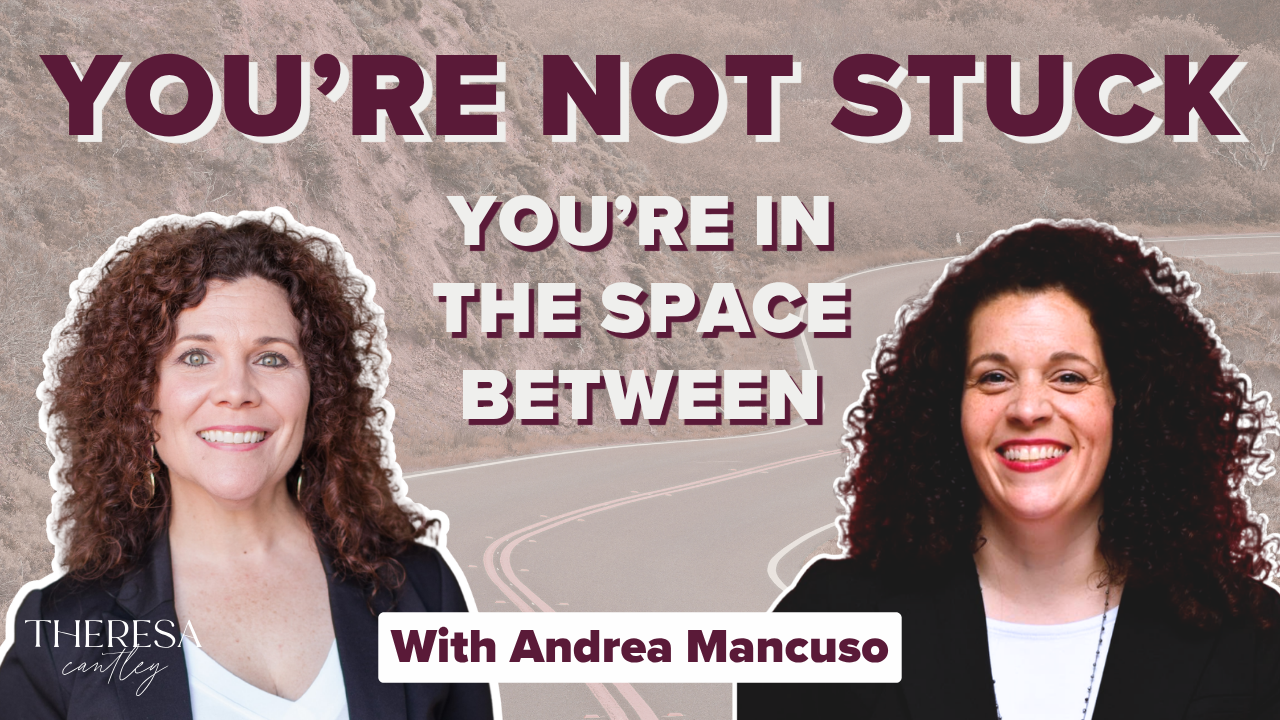
What happens after you set a goal and before you reach it? In Episode 339 of The Main Street CEO, Theresa sits down with her friend Andrea Mancuso — licensed mental health counselor, Brooklyn native, and newly minted author of The Space Between — to talk about the messy middle where most dreams are either realized or abandoned.
What You’ll Learn in This Episode
- What “the space between” really is and why it’s where dreams live or die
- How Andrea turned a single shower idea into a published book
- The three-pillar “Heal Bravely” framework from Chapter 13
- How to separate a setback from your identity
- The shift from “what if” thinking to “what is” thinking
- Why the journey itself matters more than the finish line
From a Childhood Bed Tent to a Published Book
Andrea’s dream of becoming an author started in the 80s, tucked inside a My Little Pony bed tent with a copy of Charlotte’s Web. Decades later, the idea for The Space Between came to her in the shower in November 2020 — a New Year’s event first, then a 27-page ebook, then a hybrid-published book.
She followed Napoleon Hill’s Think and Grow Rich: stay open to creative ideas and have the courage to see them through. Her cousin Michael passed away unexpectedly mid-manuscript, and she went months unable to write a word — living the very struggle she was writing about.
Heal Bravely: The Framework That Carries You Across
If Andrea could give you only one chapter, it would be Chapter 13. Her “Heal Bravely” framework rests on three pillars:
- Intentional healing (time alone doesn’t heal wounds — you have to face them)
- Mindset (rewrite the disempowering narratives shaping your choices)
- Inspired action (movement awakened by the first two — sometimes doing more, sometimes doing less).
Miss any one pillar and the results stall. Andrea’s reminder: the most magnificent wins are often internal — a lighter way of moving through the world.
Decide That It’s Already Yours
The entrepreneurs who make it through the messy middle learn to separate incident from identity. A missed opportunity is a missed opportunity — not proof you’re not good enough.
Andrea’s shift in Chapter 3 moves you from “what if” thinking, which lives in an anxious future, to “what is” thinking, which pulls you back to the present moment where your real decision lives: I want this thing, and I’m doing the work today.
Key Takeaways
The space between is unavoidable, but how you journey through it is yours to choose.
Andrea’s parting image says it best: it’s the same Sedona road trip whether you’re nervously watching the gas gauge or rolling the windows down with a great playlist. Pick the version you want to live.
Grab The Space Between on Amazon, Barnes & Noble, or Bookshop; order team bundles at Porchlight; and find Andrea at iamandreamancuso.com.
Download the full episode transcript
The Main Street CEO with Theresa Cantley
Guest: Andrea Mancuso, author of The Space Between
Runtime: approximately 1 hour 3 minutes
A full text transcript of this episode is provided so the conversation is available to listeners who are deaf or hard of hearing, and to anyone who prefers to read. Speaker names and timestamps are included throughout. This transcript has been lightly edited for readability: repeated words and false starts have been removed and obvious transcription errors corrected. No meaning has been changed.
Speakers
Theresa Cantley, host
Andrea Mancuso, guest
Transcript
Theresa Cantley (00:01)
Hello everyone and welcome back for our weekly episode of the Amuse Bouche Leadership Bites. And today we’re going to change up the conversation a bit. We’re just having a conversation. We’re going to talk about all kinds of things. But I have my very amazing dear friend Andrea Mancuso, and Andrea just launched her book, The Space Between. Literally it just came out yesterday. I pre-ordered my book, but I had a copy of it prior. I pre-ordered my book a while ago, and this book, let me tell you, is a life changer. And now that I actually have my physical copy here, I’m super, super excited. So anywhere you can buy a book, like Amazon, Barnes and Noble, Bookshop, go check. Go. I’m telling you, you’re going to want to run and go buy this book. But Andrea, thank you for joining me here today for this conversation about really what it’s like to navigate this journey of success and what happens in that messy middle. So thank you so much for hopping on here. And you’ve been here before.
Andrea Mancuso (01:23)
Yeah, I have been. Well, first and foremost, thank you, Theresa, for having me. I’m so excited because I see little post-its sticking out of your book and I’m curious. I’m like, are those little post-its where you’re taking notes? I’m excited for you. I’m excited to be back. I’m looking forward to jumping into this conversation with you. And yeah, I’ve been here before and we had a great conversation the first time around. I’m excited. This is more of like an impromptu, let’s put it all on the table and see what comes up, give the folks some value. So I’m happy to be back. Thank you for having me.
Theresa Cantley (01:58)
Yeah. And if you know Andrea, Andrea’s from Brooklyn, and Andrea makes me laugh constantly. Whenever we have conversations, she just makes me laugh. And one of the funniest things is, the one time I was talking to her and I said, where are you sitting? And she said, I’m in my office. And it’s actually a cafe that she goes to. And she has her own reserved space, which I think is fabulous. Fabulous.
Andrea Mancuso (02:29)
Yeah, I love the cafe. I had to tell them that that was my office. I was like, how’s this going to go over when I’m basically telling the people who work there and own the place, hi, I’m here, I’m in my office, my office hours.
Theresa Cantley (02:45)
This is my office. And the one time when people were sitting there and she’s like, they’re in my office.
Andrea Mancuso (02:54)
Especially if I do a Zoom call that’s a bit more casual and I’m able to just listen, and I have my earpods in, and then sometimes groups of people come in, like they should, because it’s the cafe, and everybody’s laughing or kids are crying and there’s all different things going on and I’m on the Zoom and I’m like, I’m in my Zoom meeting in my office. So it has allowed me to meet so many people, because I’ll joke with people and share with them, like, I’m in an office meeting, and they crack up. They’re like, this is my office too. So I’m apparently not the only one who treats it that way. The name of the cafe is Ambi, and it’s a wonderful place in Somerville, New Jersey. So I’m apparently not the only one who has that space as their office.
Theresa Cantley (03:41)
Hey, it’s part of being an entrepreneur, right?
Andrea Mancuso (03:45)
Yeah, exactly. And you know what I love about it too? And you could appreciate this. It sits on the corner of Division Street, which is one street that doesn’t have cars. There’s no traffic. And it sits on the corner of Main Street in their town. And I know that you pour into Main Street businesses. And it’s one of my favorite things, because the cafe is on the corner and, I don’t know if you’re aware of that picture, like back in the day there was a photograph of a cafe on a corner and it’s a nighttime scene and you’re able to see in. That’s what it reminds me of. Ambi reminds me of that, because it sits on the corner and so there are windows that go alongside the whole side of it. But because it’s on Division Street and Main, you’re able to see a bit about the small town life, but then Division is closed off. So it gives that charm, which I know people have a passion for. And I definitely love that as well. So it’s fun to call that.
Theresa Cantley (04:46)
I do. I do. And we talk about that a lot, is the passion that I do have for Main Street businesses, and you do as well. And what it feels like to go into a Main Street business and you’re like, it’s like you start dreaming and you start getting creative. And I think that’s the magic that happens when you’re in a local business, a privately owned business, is that you feel that creativity and that dream come through. And like I said, there’s just something magical about it. Which, talking about dreams, I know it was always one of your dreams to write a book and become an author. So tell us a little bit about what that journey has been like. Because I know so many people say, I’d love to write a book. I wrote my first book, and people have said, yeah, I would love to write a book. But a lot of people, I mean, it’s a journey, and a lot of people don’t quite do it, because once you get into it, it’s hard. So tell us a little bit about the journey, because like I said, I know that writing a book was a big dream of yours.
Andrea Mancuso (05:59)
Yeah, it really was. I was saying last night I actually had the launch party for the book. So forgive me, I’m a little disheveled, because it was a great, great fun night. But I talked about at the event that the event space was actually in the backyard of my childhood apartment. And that was so special, because that’s where my dream for becoming a writer started. I used to spend a lot of time in my My Little Pony bed tent. Anyone in the eighties, you can appreciate this. It was like a twin-size bed tent and it had a zipper, so you would be able to close yourself into the little area. And then on the inside there were pockets. And I used to keep, I had Charlotte’s Web in there. And I used to have my magazines, my Bop magazines and little teen stuff going on. And I dreamed from then of being an author. I was just always fascinated with it. I really loved the idea of it. I thought that it was very cool to have something that you created. And so the dream started then. I didn’t start writing until, well, in that way, I didn’t start writing a book until a little bit more than five years ago. And it didn’t start out initially, this was not the lifelong book idea. But it’s interesting, because I ended up following some signs. And I want to share this because I think anybody listening, you may be able to map on some things. I remember reading Think and Grow Rich by Napoleon Hill.
Andrea Mancuso (07:38)
And I read that book a couple of times. And one of the things that he talks about is being open to and tuned in to the creative ideas that you have and having the courage to see them through. That this is something that when you are tapped into your creativity or even your own journey, you ought to be able to hone in on the ideas that come to you. And so what ended up happening is The Space Between was actually the first event on Zoom, virtual event, that I hosted with my business when I launched my business in 2020, May of 2020. I hosted The Space Between January 1st of 2021. And the idea came to me. I was in the shower. I always say all good ideas come when you’re in the shower. And I was thinking, it was November of 2020. And I was thinking, I’m a new year resolution girl. I love the idea of a fresh start, blank canvas, the fresh start effect. That’s a vibe for me. So I always set out to do things in the new year. And I remember being in the shower in this particular November 2020, and I was thinking about, what am I going to do this year? What do I want to focus on? What do I want to give energy to? And all of a sudden the thought occurred to me. It’s interesting. We’re always thinking so much about our goals and wanting to celebrate the win, but nobody talks about the space between, the messy middle where all of the work happens, and it’s the place where a lot of dreams are either realized or abandoned, because that’s where all of our stuff comes up, life happens. And I was like, hmm, this is interesting. And so I thought to myself, The Space Between, I’m going to host that as a new year event to talk with people about, well, what are some of the things that happen in the space between? And from my own personal journey and what I know about going through my own stuff, there’s a lot that happens. There’s fear, there’s doubt, there’s questioning whether you have what it takes. There’s life that, sometimes life happens, curveballs, sometimes we lose loved ones, we go through all different things. And the plan doesn’t go anymore the way that we once thought it would. And so that was the first event that I hosted virtually. And it was a great turnout and we had a great time. And the topic stayed with me. I kept thinking about it. And I was like, there’s something here, because I continuously find myself in this space. Because, and I think for you, Theresa, you could identify, and for everybody who’s listening, if you identify as a goal getter or a high performing woman or man, or you’re somebody who’s continuously chasing dreams, you are often in the space between. You are not where you were when you came up with the idea, but you’re not at the finish line yet, and there’s all of this journey that still has to happen.
Theresa Cantley (10:41)
And people want to fight the messy, people want to fight that space between. They want to go from just starting to making five million dollars and they don’t want to fight what happens in between.
Andrea Mancuso (10:53)
Totally. And I know for me, I’m one of these people that when I decide I want something, I want it yesterday. I’m like, okay, I made my decision. What’s going on? Where is it? And the thing is, there’s this undeniable process and journey that we have to go through in order to reach the finish line. And a lot of times it looks nothing like what we thought it was going to look like, because I think in ways from a human perspective we tend to think that when we decide to go after something, we start to move in this linear way. And it’s going to be progress after progress and step after step, and we’re going to get closer and closer. But the path to our dreams, especially the bigger the dream, the more complex the path, is usually like, you know, like this. It’s all like a hot mess. And that is why, I know because I’ve quit many a thing, stopped working on things at different points, because when I was met with certain obstacles and certain setbacks, I wasn’t prepared to see myself through those things. And so the space between became really a fascination of mine starting in that January of 2021 mark. And I decided to turn it into what at the time was an ebook. I was thinking, well, I’m so passionate about it. I really think there’s so much value here. I’m going to turn this into something that I could use as some sort of ebook, some sort of lead magnet. That was my initial idea. And so I wrote it up. It was about 27 pages. I wrote it up and it was very to the point, because again, it’s 27 pages, you have to land it. And it ended up becoming, I ended up hearing one day a podcast episode, and a gentleman who is a CEO of a hybrid publishing company was on the podcast. And I was listening. And at the end he said, if anybody…
Theresa Cantley (12:44)
Was it Naron?
Andrea Mancuso (12:46)
Yeah, it was exactly. From Mascot and Amplify. And at the end he said, if anybody has any questions or whatever, don’t hesitate to reach out. And I wasn’t so aware of hybrid. I had heard of it, but I only knew of traditional and self. And I know that traditional publishers require you to have a big platform, and I had a smaller platform.
Andrea Mancuso (13:11)
And so I was wondering, I wonder if hybrid publishing requires a huge platform, and what’s the difference. And so I ended up reaching out just to have a call to say, hey, these are some questions I have. And at the very end, he was telling me Amplify and Mascot, the difference between the two, what types of projects the two work on. And at one point he said ebooks. And I was like, ebooks get published? I didn’t even know that. I thought it was just something that you create electronically and that was the end of it. And he said, no, you can totally have ebooks published. And I was like, wow. And I said, because I recently wrote something. And so he agreed to look at it, and from there we had another call and he basically said, I think this should be developed into an actual, there’s something here. Like I think that, develop it further. So the writing process from there is, I followed it, to the point about Napoleon Hill. I thought to myself, follow this. This is coming up for some reason, see this through. And so that’s what I mean when I say this wasn’t the initial book idea. I think for me, the initial book idea, the thing that’s on my heart, is more of a memoir, but this was something that ended up coming up.
Andrea Mancuso (14:32)
And so I followed it through. And when I started to write, Theresa, my gosh, it was so challenging, because here is the 27 pages of sort of like bottom line that I thought was really important. And now it’s taking the 27 pages and developing it into, and I questioned myself so much. There were days where I was like, what am I doing? This is so hard.
Theresa Cantley (14:59)
Why did I decide to do this?
Andrea Mancuso (15:02)
Yeah. I was like, this is so hard. This is like crazy. And so I was working and working, but then I was literally living what I was writing about, because life was happening. Curveballs were coming. My cousin, one of my close cousins, Michael, he passed away unexpectedly. And I was in the throes of grief. I couldn’t even write a word. I would open up the computer and I would be like this for an hour, for two hours. I would maybe delete a word because I would be like, this doesn’t make sense, and then close the computer. And it would be one month, two months, three months. And I was like, how am I going to finish this? But the desire was always there. It was just there was an obstacle.
Andrea Mancuso (15:53)
And the interesting thing was, I was writing about it. And so it was wild, because I was like, wow, you’re literally living it.
Theresa Cantley (16:00)
It’s real.
Andrea Mancuso (16:03)
Like this is so real. So it’s so important to me. This piece is so important to me, because it’s not written from a standpoint of try this and do this and your stuff is going to work out, right? It’s really written from the standpoint of lived life in the trenches. Sometimes just pumping out three words and then being like, okay, a little bit closer, a little bit closer to seeing the dream to fruition. And I say in there, it really is applicable for, doesn’t matter how big or how small your dream is, the words and the suggestions that are in the book will help you to cross the finish line on all of the things.
Theresa Cantley (16:41)
Well, one of the things that I saw in here, and this was on, because writing a book, and I’ve said this before, it literally breaks you open. So you could be the grandest expert ever, and when you start to write a book, whatever the topic is, it just breaks you open. Because now you’re putting, and that’s part of the craft, is you’re putting yourself out there. You’re saying, this is something that I want to do, and then you’re moving forward with it. And now all of these things get revealed. And there’s a lot of healing in the process. I know when I wrote my book, my book is a lot about my journey. I mean, it is written memoir style, and it’s a lot about my business partner passing away and having to deal with that, and then just things that happened along the way. And one of the chapters that you have in here, because like I said, when you’re writing, there’s a lot of healing that happens. And in this book, when you get this book, there are exercises in here where she has you do something and then she gives you lines to write on. So you can actually do some journaling, right?
Andrea Mancuso (17:57)
Yeah, yeah. That was important to me in terms of this process, because given the going after your dreams and the journey, there’s so much that comes up. And I wanted you to be able to really in the moment be with some of it so that it actually gets done and you spend some time reflecting. Because I felt like if it was written about and the suggestion was made, like, reflect on this, it wouldn’t look the same as if somebody actually was able to pick up a pen and be in the moment with what was just written. So yeah, this part is one of my favorite parts about how it’s designed, so that it really allows for the reader to spend a minute with some of these concepts. Because I think some of what you spend time with in there will change the trajectory of where you’re going.
Theresa Cantley (18:44)
Absolutely. I mean, absolutely. I’ve worked with Andrea myself in a one-to-one role with helping me work through some things. And I know some of the exercises that are in here are things that you’ve had me do. And I can attest to how powerful they are and how, like I said, how life changing. One of the things that we’ve talked about many times, and it’s one of your key frameworks, is Heal Bravely. And that’s in the book. It’s in chapter 13. So take us through, because I know again, we’ve talked about this and the work that we’ve done together, and it’s in the book. So take us through a little bit about what that framework is about.
Andrea Mancuso (19:36)
Yeah. So I say in the book that if I could only give you one chapter in the book, it would be that one, the Heal Bravely chapter. Because what I have come to discover, so I am a licensed mental health counselor. My first degree was in therapeutic intervention. I’ve studied psychology and human behavior for close to 25 years. And what I have come to discover is that you can want something with all of your might, but if you do not believe that you are good enough for having it, or that you are worthy of a thing, or if you feel that there are some sort of wounds that prevent you from going into this. Like for example, if somebody has a dream that’s going to require them to be very visible and they are deeply concerned about how they’ll be perceived, or they feel very insecure, or they are uncomfortable, they will sabotage their results without even realizing, because they’re going to want to keep themselves safe from being in that position. And so the idea of Heal Bravely, it’s really an invitation to do the inner work to make sure that the dreams that you have, you’re becoming the person who is capable of seeing the dreams across the finish line. And the framework itself consists of three different aspects. One is intentional healing. It’s this idea that time does not heal the wound, that we need to give energy and focus to the things that are on our minds, on our hearts, coming up for us, standing in the way, because otherwise we could wait forever. And my oldest client is in his early eighties and I love working with him, and one of the things he said was, I’m so done trying to just wait to see if things are going to get better.
Andrea Mancuso (21:28)
And I love that, because I was like, this is the epitome of intentional healing in action, right? Like one decade, two, five, seven, eight could pass and the thing doesn’t go away. So intentional healing is one of the pillars of the framework. The next pillar is mindset. And mindset’s so important, because if you have a disempowering perspective on things, or if your default is to tend to look at things through a lens that doesn’t lift you up, it’s going to be very hard to go after whatever the thing is that you want. It’s going to be hard to access the type of results, and also it’s going to impact how you feel about yourself. So that’s the second pillar. So we do a lot of mindset work and perspective shifting and rewriting narratives and identity work, because there needs to be a reframe in a lot of cases to have things be different. And then the third part of the framework is I reference it as inspired…
Andrea Mancuso (22:27)
…action. It’s the action that basically comes from and is awakened through the process of the intentional healing and the mindset work. It may not make sense to a lot of people, right, the inspired action, but it doesn’t have to. It just has to align with you and what it is that you’re looking to create in your life. And sometimes for some people, inspired action means doing more and doing particular things. For others, I’ve worked with clients where inspired action meant scaling back and doing less. It’s not always about more, more, go, go, work harder, do the thing. In some cases, it’s about slow down, chill out. We’ve done this whole fast-paced life for a long time. And so every journey is individualized and so unique to the person. And I have found over the years that if one of those pieces is missing, if healing and mindset are in place, but the action isn’t there, the results don’t happen the same way. If action is happening and mindset’s happening, but the person’s refusing to face the stuff that’s lingering, it holds them back. So I really have found that these three things, once they click into place and the person has them going, that’s when clients have literally created just extraordinary results that it’s been really so fun to be with them as they are navigating. And the freedom. And really quick, Theresa, before I hand it over to you, something that I think is so important to spotlight. Sometimes our most fabulous, fantastic wins are not tangible. It’s the internal shift. I’ve had clients that when they start to see themselves for who they are, as opposed to seeing all the things that they’ve always judged about themselves, the way they move through the world is so different. There’s a lightness, there’s an enjoyment. When I see clients that are able to change their relationship with stress, the way the health transforms is unbelievable. There are things that have gone into remission, things that were once flared up in ways where it was impacting, and now it changes. So I always like to spotlight that internal results are just as magnificent as the external.
Theresa Cantley (24:54)
A lot of people don’t pay attention to that. I know over the years I haven’t paid attention to that. And I know in the work that I’ve done with you over the past couple months, those are things that we’ve pointed out. Is that those internal wins are more powerful than those external wins. I mean, you could make a million dollars and still be miserable as heck. And that internal piece is the part that really needs to be celebrated and also be paid attention to. And it’s one of the things, and you just said this as part of your framework, the thing that we worked on a lot, and I think the thing that entrepreneurs have a lot of trouble with, is the identity piece. Because I know for myself, my identity, and I talked about this on Tuesday when I was at a workshop, my identity, and I’m not afraid to admit this, but my identity and my business were kind of intertwined and I didn’t even realize how intertwined it was. And I think, if you want to talk a little bit about how that happens with entrepreneurs and what you can start to do to unwind that, because I know that’s part of your framework and I know there are things in the book that talk about that.
Andrea Mancuso (26:14)
Yeah, for sure. Identity is huge. I mean, myself too, I’ve been on my own journey with it. Because a lot of times what happens is we go through experiences, life happens, right? And especially our sense of self is developed when we’re younger. And so if we experience any sort of challenge, upset, struggle, whatever it looks like, whether it’s at school with peers, if there’s bullying, whether it’s at home, if there’s conflict, if there’s trauma, anything that happens in those regards, it shapes our sense of self. And so we go on to see ourselves and hold ourselves to be certain ways, and treat it as fact. Right. And now when we start to do different things in the world, our identity becomes very much intertwined with productivity or worth or our enoughness. And we could go on and on with all the different things that it could potentially connect to. And when things happen or experiences take place, or let’s say opportunities don’t turn out, it can come to mean everything about us. We’re not able traditionally to identify and separate. A missed opportunity is a missed opportunity. It doesn’t mean that I’m not good enough, that I am inadequate, that I am not capable, that I am not measuring up in some capacity. But usually the mind, if that feeling is there and that belief is there, it’s a reinforcement. Right. And so a lot of the work that I do with clients is to really separate incident from identity. What is happening is happening, and that doesn’t mean anything about you as a person. It means what it is. So if you go interview for a job and you don’t get it, a person who day to day lives in this not enough narrative, they will take that as a sign that, you see, I’m not good enough, I’m not measuring up, I’m inadequate. That’s going to be reinforced. When we’re able to separate it and do that work, which is in essence healing work, it’s conversation. People will often say, healing has this reputation where it’s very woo woo, and what are we going to do? And when I speak about healing work, it’s conversation. It’s talking, it’s peeling back layers of, well, let’s look what’s underneath that, or when did that first present? And let’s get an understanding. But it’s not more than that. Because I think when people hear healing work, sometimes it could be very like, you know, like this.
Theresa Cantley (29:04)
Well, everybody always thinks of it that way because of, I mean, honestly, there’s a lot of stuff out there and you and I have talked about it. There’s a lot of stuff out there that it’s like, yeah, healing is all about the woo woo, and it’s really, it’s not. And that’s why people just associate it that way and people are like, well, I don’t want to go through that. But it’s not. It’s just about conversation.
Andrea Mancuso (29:29)
It’s conversation. And often people will say, well, I don’t want to have that conversation, because they’re afraid of what is going to come up. And what I always tell people is, not having the conversation is harder than having the conversation. Because when you’re not having the conversation, you’re trying so hard to go through life holding it all together and trying to avoid the thing. And there’s so much energy. It’s exhausting to go through it in that way. When you start to actually face the things and just directly, intentionally talk about the things, this is where clients always say, I wish I started this sooner. Why was I so afraid? Because it has this bad reputation and people think, my gosh, stuff is going to come up that I don’t want to deal with. You’re carrying the stuff with you every single day.
Theresa Cantley (30:16)
It’s heavy.
Andrea Mancuso (30:16)
We know, right? And it’s heavy. We know at any single moment our stuff can be activated like this. Having a conversation about it doesn’t make that harder. It’s just that you’re now having a conversation about it and you’re able to then access new perspective. Here comes the mindset part. Access new ways of seeing it. Recognize that what it potentially is doesn’t define you. It’s like we have experiences. We are not our experiences. When we’re able to shift that apart from each other, this is why people literally, I feel like people start to walk differently. They just move through the world differently, because it’s no longer holding them, all of the things. And it looks different for everybody what it is, but it’s so important to be with it, because then it’s like, finally, I don’t have to hold this anymore. So I always encourage people, and clients will always say to me, wow, I wish I started this sooner, because I really held it to be so hard. But what was hard was really trying to get my way through life and not address the stuff. So it’s a game changer in that way. And identity, when identity work is done, where you’re really able to start to separate these things from who you are as a person, then this is the exciting journey to be on, because then it’s like, okay, so who are you when you’re not trying to be something for everybody else? Right. When you’re not trying to fit this mold that society gives, when you’re not checking all the boxes to be the person who did everything right and got everything perfect and didn’t get any criticism. Like, who are you then? And that’s where the real self emerges during the process that I do with clients. That’s so exciting. Because then people will discover things. They’re like, you know, I actually want to do this. This has always been a thing, but I was always so nervous because I was afraid that people would judge. And when people are like, people are going to judge anyway. So what do I really want to do? Now you start to see people so happy and fulfilled, because they’re like, I’m doing the things that matter to me. And that’s huge.
Theresa Cantley (32:23)
Yeah. Yeah, it’s huge. I think, and you’re right, because I mean, we’ve all been there where we’re afraid to put ourselves out there. We’re afraid to say something. We’re afraid to do something because we’re afraid of judgment, fear of rejection, fear of it not working, fear of loss, all of those things. And it’s funny because I actually marked this, it’s your chapter three, decide that it’s already yours. And one of the things that comes up is, going along with what we were just saying, once people work through this, they move from that what if it doesn’t work, what if people don’t like it, what if. When they work with you, when you read this book, when they do that work and they start to let go of those things that have been weighing them down, when they actually face those fears or face those things, have those conversations that they didn’t want to have because they were afraid of what was going to come up. When they do that, and you talk about this, like I said, in chapter three, you move from that what if thinking to what is thinking. So let’s just kind of talk about that for a little bit. What does that mean? Because somebody who’s listening to this is saying, okay, I’ve done therapy. There are certain conversations that I don’t necessarily want to tackle, but I also am still feeling stuck. I hear what you’re saying, Andrea. But what if. Because we just had this conversation. What if I put this out there and someone doesn’t like it, or someone says this, or whatever. So how do people start to shift from what if to what is?
Andrea Mancuso (34:20)
Yeah. So I love, the distinction is a big one. And this will resonate for anybody also who has any level of anxiety and worry that’s part of their personality, their disposition. Because from that perspective, what if thinking lives in the future. Right. What if this happens? It didn’t happen yet, but you’re thinking about the possibility, right? So a lot of times that can create so much uneasiness, because we’re not there yet. So it’s like you’re taking yourself into the future. What if it doesn’t work out? What if nobody signs up? What if it flops, right? What if I stumble and make a fool out of myself? That is all possible stuff for the future. The shift to what is, is your way of pulling it to the moment, right? Okay, I’m working on launching a program. What is happening is that I am creating this experience that’s going to provide this transformation. I’m showing up on social media, I’m sharing and networking, I’m connecting with different people. Now you’re in the now, and it alleviates a lot of the unknown and pressure, because you’re able to focus on literally the things that are here happening now, which ultimately brings you to a more calm state, because the spiral and the catastrophizing is sort of reeled in, right? Because when we go to the what if, it’s always usually worst case scenario, and it lives out there in the future. And so the reel back, the pulling it in, is to bring it back to this moment to say, well, wait a minute, what is actually happening? Right? If it be a relationship thing, a career thing, a creative project, we don’t want to go to, well, what if people criticize it? Let’s use me in the book while I’m writing, right? What if the book is a flop? Okay, it might happen, right? We don’t know what’s going to go on when it’s all happening. But the shift to what is in that moment is, what is happening is that I am working to take years of learning, experience, wisdom, lived life opportunities, all of the things, being thoughtful about putting it together, being clear in the way I express it so somebody could get it. So even if one person gets it, it did its job, right? If I would stay in the whole what if thing, the book would never come, because I would be too afraid. And so this is where when you are on a journey, whatever the journey is, and you are finding yourself in the what if mode, we want to really start to tap into what is, come back to the moment, because you will take yourself out of the running on all the things if you stay in that space.
Theresa Cantley (37:16)
Most people are there. Most people stay there. Most people stay in the what ifs.
Andrea Mancuso (37:18)
Yeah. And I definitely have. And it’s like very, because in a way it’s like a coping mechanism, right? When you do a what if, you kind of entertain the worst case scenario and then you could almost prep yourself in case that happens or whatever. But what usually happens is you come back from that and you do nothing then. Because now you kind of went to that land and now it’s scary, it sucks, and you don’t want to deal with it. So now you come back to the moment, reality, and that can be jarring. But what’s happening is your fear of the future failure or setback or not turning out well is really informing your current decision.
Andrea Mancuso (38:02)
It’s not your real decision. Your real decision is, I want this thing. I want to do this thing. And when you stay in the what is, you get to stay connected to that. And when your mind goes, which believe me, it will, and mine does a million times over and has with this project too, I have to continuously reel it back, because I’m like, stay close to your vision. My vision was, I always wanted to be an author. I always wanted to have something that would outlive me. That would be just a creative piece. I always wanted to have my name on something that could be held in hand. I had to continuously bring it to what is, to stay there, because otherwise I would be too afraid of the criticism, the, is it going to blow up? Is it not? Are people going to laugh at me, think it’s stupid, whatever the story is, right? So if I stayed there, if I didn’t allow myself to move forward with the project, it would be because the future fear was impacting. And so what is is so powerful, because then you can be like, even in your case, right? Like, what is is that I’m writing this book and getting it complete and making sure that it’s in excellence so that I feel proud to put it out. And of course, which is totally part of it, I used to want to bang my head against the wall at times. I would be like, this is so, and especially, you submit it and you’re like, okay, I think that’s good. And then you get the message back and the marks are on it and you’re like…
Theresa Cantley (39:30)
Here’s your forty pages of edits. And I’m like, I quit. I give up. I quit.
Andrea Mancuso (39:31)
Right. You’re like, I know. And most people do, right? Which is why I think, and they say, and I’m not exactly sure of it, but it’s something like only one to two percent of the population becomes an author. And so, that part. Why? Because here’s the other part. If you don’t have your healing work done and you don’t have your mindset worked out, what’s going to empower you when you get a forty-page suggested revision direction, whatever, that you have to now follow? What’s going to happen? You’re going to spiral into, forget it. This is not good enough. I’m not going to be able to do this. Maybe I should stop. Maybe I’m not capable of being an author. And it’s like, no, the person who is connected to what is in their dream, they’re going to say, okay, so I’m going to do a few pages today, a few pages next week, a few pages after that, because this is the path. This is the space between being just a regular person, let’s say, for lack of better words, and then the finish line is the author. And the author is going to go through the revision and get through frustrations, and they’re going to continue to do the thing because they are going to see their project across the finish line. The person who doesn’t, they’re not able to get all of those things worked out. And it’s no, we’re not here to say there’s any shame in that. I’ve been that person in lots of different ways for lots of different goals. Right. Yes, some that I want to pick back up and get to because I’m like, I still want the thing. I just wasn’t capable at the time of seeing myself through that path, the space, the messy middle.
Andrea Mancuso (41:24)
But this is the part that I think you don’t see, right? We see the wins, we see the celebration, we see, like some people might see the launch party and the book, they didn’t see me when I was laying on the bed crying at night, being like, my gosh, how am I going to do this? Like it’s been six months and I haven’t picked up this manuscript and I need to get these friggin’ things back over to the, that part. And because of who I am and what I have been through in my own personal life, lived life, experience, I’m in a commitment to be vulnerable and transparent and courageous and show people those details, the mess and the difficulty, and tell people the thing most people are embarrassed to say, because I want people to know they’re not alone. I want people to know that this is part of it. What you’re seeing on Instagram is the highlight reel, and nobody’s showing the part where they’re laid out questioning their whole life. You know what I mean? But it’s there.
Theresa Cantley (42:24)
It’s true. It’s true. It was funny. I heard something, because I’m all about being honest, being transparent. I’ve built many multi seven figure businesses, eight figure businesses, and have helped many business owners, but I am not immune to having that fear. I am not immune to completely crashing and being like, I can’t do this. And if I was one of those people that said, no, that never happens to me, I’m always confident, I would be full of it. And I think it’s important to share the realness of the journey. I think it’s important to share, yeah, I do this work and I’ve impacted lives, but at the same time I’m a human being and I still deal with this stuff, which makes me even more equipped to help other people. And I think, so often, and I saw this, someone was saying that entrepreneurs, small business owners, they just have it hard. And the comment was made that people who are CEOs of corporate companies never complain. And I was like, and where are you getting this information? Have you talked to the guy who runs Microsoft? No. All you see is, and I actually said this, all you see is what Forbes magazine is posting or what Fast Company is posting when they did an interview with that person. But I saw an interview with one of those CEOs that said, I made a huge mistake and put something in place to drive performance. And what it did is it created a culture that was completely frustrated. And he said, I completely failed and the business was going backwards. And he himself was like, now I feel like I’m not a great leader. But at the same time, I’m also confident in myself to admit it. Like I have that ability to be vulnerable and say, I made that mistake. And I think, again, it’s part of the work that we’re talking about. It’s part of that journey. It’s part of that journey to, as you always tell me, where you are and where you want to get to. And what happens in the middle is, I mean, it’s messy and it’s change and it’s frustrating and it’s real, and you have to be willing to face it. You have to be willing to face that hard stuff and go the extra mile. And Paula Abdul, she has this comment that she’s made, that not many people are willing to go the extra mile. But when you do, the space is wide open, because not a whole lot of people are willing to do that. To go through getting uncomfortable, doing these things, facing our fears, doing stuff even though we’re not sure how it’s going to turn out, we do it anyway. And it’s something that a lot of people aren’t willing to do.
Andrea Mancuso (45:39)
Yeah, and I understand, right? Because I think about entrepreneurship and I think about the idea of, as I’ve been reflecting on this a lot more lately about entrepreneurs and something about them, us, which is we are more willing to continuously be rejected and keep going. And the average person can’t, because what happens is the rejection becomes so personal and it becomes so hard to deal with. And entrepreneurs go through that as well. The thing is that they just keep going, right? And they ultimately learn that the rejection is not a reflection of who they are as a person. It doesn’t mean anything about them. It just means that they’re persevering and they’re resilient and they’re willing to keep going. And that’s why entrepreneurship is like the biggest personal development journey on steroids, right? Because you continuously find yourself in these scenarios. And the ones that do well and stick it out, it’s because they are doing this inner work. But I think that’s the space between. It’s not enough to say that you want a thing. What I’ve come to learn during this writing journey about the process and living it is, it also calls you forward to commit to seeing the journey through. And in the book I say, it’s a matter of the version of you who sits here now, the version of me who’s in this moment now, I’m not the version that’s going to get my next dream across the finish line. And so it’s when you’re deciding on something, there’s so much value, importance, and significance really to deciding wisely what you want, because you’re ultimately committing to that path.
Theresa Cantley (47:38)
Yeah. As delusional as it is.
Andrea Mancuso (47:38)
You know, so if you want to have, making this up. Yeah, it’s like you need a big healthy dose of delusion to go with all of it, because oftentimes you’re seeing the vision way before anybody else does, right? And that means oftentimes you’re alone in rooms when, whatever, all of the things are being tested and everything. But it’s really deciding, I want this thing and I am signing up to become the version of myself that’s going to turn it out. And when you talk about, like as an independent author, I don’t have a publishing house behind me. I don’t have a huge marketing team and PR team. In order to get the book across the finish line and get it out, I needed to put myself in uncomfortable situations and ask for support and share of myself in ways that called me, stretched me. But I was in the commitment to do it because it was part of what I signed on for. And when you sign on for, and anybody’s listening, whatever your dream is, it can look a million different ways, because there are so many directions. It again could be something to do with career and business, finances, it could be something to do with creativity, it could be a relationship goal, to fall in love, to get married, whatever the thing is. You’re not the version of yourself that’s going to cross the finish line. And if you think that you are, you’re going to have a really hard time getting there, because that is what the space between is about. It’s literally that in-between area of you think of the thing and then you get it to fruition. And what usually happens when we get there too, Theresa, right? Like you get to the finish line and it’s usually most people are like, okay, what’s next? Right. There’s an importance in choosing a journey that matters to you, because it’s really the journey. How do you want to learn? How do you want to be stretched? Where do you want to call yourself forward? Because as soon as you cross the finish line, you celebrate for a little bit, if you’re lucky, a day, two, maybe three. And then it’s like, okay, what’s next? That’s what we do.
Theresa Cantley (49:47)
That’s that reshape, and it’s that you’re constantly going like this and you’re constantly being reshaped. Whereas a lot of people, they finish something, they’re like, yeah, I’m good and I’m going to tackle this next bigger thing, and they get stuck because they don’t realize that every level you grow, or what you’re building is growing, every new level of what you’re building, you have to grow with it. And I think a lot of people miss that piece. And it’s that reshaping, because that reshaping, it’s not pretty. It’s not easy. But it’s necessary. And this book is the thing that helps get you through every single one of those stages. So I have a question for you before I let you go, because this has been such a great…
Andrea Mancuso (50:49)
Thank you. This was so good. This was the highlight of my day. Thank you.
Theresa Cantley (50:52)
Yeah, such a powerful conversation. And I wanted to have you on, because first of all, I love talking to you. Second of all, I think that so many people need this, especially right now. You hear we’re in a trust recession and you see it all over the place. People are frustrated, they’re disengaged, they’re giving up. I know a lot of people who are quitting entrepreneurship because things are different with the rise of AI and technology changing and just how people are buying. And I think it’s that messy middle for everyone. I think there is a renaissance and a rebirth that we’re in. And it’s whether or not people are willing to go through this and stay in that space between and go through what they need to go through to get to the other side, to have that new level of growth. And that’s where you come in. That is the impact that you make on people. And that is the work that you do with people. That’s the work that you’ve done with me, which I’ve been so super grateful for. So, question. Which one was your favorite chapter?
Andrea Mancuso (52:09)
Oh boy, what’s my favorite chapter? Oh man. You know, in this moment, I feel guided to say, and this is probably going to change, I’m going to actually track this to see if it changes day to day, conversation to conversation. But in this particular moment, I’m going to go with the last one that speaks to have fun.
Theresa Cantley (52:35)
Have fun. Okay. Okay. The thing that I, I mean, I loved, I’ve gone through all the chapters, and since I got my book last night, I’ve been flipping through, and the one thing I keep coming back to is the vulnerability manifesto.
Andrea Mancuso (52:55)
I love that. That’s one of my favorite pieces. That closes out the book, for anybody who’s watching. And it’s more of a creative, I don’t want to call it poetic, but kind of. I would call it creative writing. Maybe poem vibes. What?
Theresa Cantley (53:17)
You know what it reminded me of? Common, when he writes his raps. That’s what it, because his stuff is like poetic when he writes it. But that’s what it, when I was reading it, because Andrea and I are both like total nineties hip hop fangirls. And when I’ve read this multiple times, it just reminded me of the poetic way that some of these hip hop artists write. That’s what it reminded me of, to be honest with you.
Andrea Mancuso (53:55)
I love that. No, it’s so good. And I wrote that, initially I wrote that separate from the book. That was a piece that I wrote when I started to just kind of tap into some creative writing. And it was something that I just loved. And I actually shared it when I went to an open mic night for the first time. I never did it before. And I went and I read that and it was just received in such a way that was just overwhelming. And as I was finishing the book and getting closer, I was thinking about it. And I was like, I wonder, I think I’m going to plug this in here, because I felt like I wanted it to be the parting gift to the readers. Because I think it does summarize a bit of what comes through in all of the chapters. It’s really what I like to say is a declaration for people to commit to, hence the manifesto. But I’m so happy that you love it. I’m so happy, because I read it regularly and I have to practice regularly what it says, because again, we go on the journey and all the things happen. So I think that if nothing else, that’s a piece that people can keep close and recommit to and recommit to, and call themselves forward. But I say have fun because I think about how we are all working so hard and we’re here for such a short time. And it’s like, what are we doing if we’re not enjoying ourselves?
Andrea Mancuso (55:32)
And so being purposeful, whatever it is that everybody decides to go after, make sure that it’s something that you’re passionate about, make sure that it’s something that you really want to experience, and have fun with it, because it’s your life, it’s your decision to go after the thing. And how we journey matters. I think about, I’ll land it here. If you think about a car ride, and this idea of if you’re on a road trip, there are multiple ways you could go about it, but imagine that in one of the experiences, you are waiting for the last minute to put gas in the car. You are potentially listening to a staticky station. You are navigating in a way where it’s just stressful and overwhelming. And if you’re in Sedona driving through and you are low on gas, you’re not going to be able to enjoy the beautiful red rock mountains and stuff. You’re going to be looking nervously at your dashboard to be like, wait, where’s the next gas station? That’s one way to journey, right? But if you go same road trip and you fill up and you put on a great playlist and you open up the window and you have your sunglasses on, your vibe, like same drive, but now you’re like, my gosh, right? Like you can totally enjoy it. So how you journey is up to you. It’s not outside of you. It’s up to you. And it’s with any goal, with chasing whatever it is that you want to chase. And so when you realize that, it’s like, well, wait, let me actually do this thing in a way where I can enjoy it. Because it’s so special. Why the hell do I want to be so high strung? And I know I’m definitely someone who could speak to both ways, because I lived for a long time in that way. And when you start to experience it differently, you’re just like, my God, I don’t ever want to live like that again. So that’s really the call to action to everybody: whatever you’re doing, be sure to have fun, because the journey is so quick.
Andrea Mancuso (57:44)
It’s so quick. And you want to just make sure that you can enjoy the most of it, the magic moments. But Theresa, thank you for having me on. I’m so excited. I hope that anybody who tunes in, you find value and you feel like you hear the thing that’s like, yeah, I needed that today. I appreciate it so much. And the book…
Theresa Cantley (58:02)
Yes. Yes. Absolutely. Let the listeners know. First of all, you can get The Space Between from Amazon, Barnes and Noble, Bookshop. If people want to order bundles of books, where do they go to order a bundle? Like if they want to buy one for their team, for example, where could they go? And we’ll include all of this in the show notes and we’ll include some links in the post. But if they want to buy a bundle, where can they go?
Andrea Mancuso (58:42)
Awesome. Yeah. Bundles are available at Porchlight, www.porchlight.com. And you could literally type in The Space Between and it will come up. And that is where bundles, bulk orders are available. It’s actually a great piece. I have been thinking really about who will benefit. Funny enough, I know this is, you’re not supposed to say this, but I feel like it really is a book that’s universal and everybody will see themselves in it. But I also feel it’s a great piece for teams and sales and stuff like that, because where you are and where you’re looking to go, it’s going to pull you through this whole process, and being able to map on these tools, I think, is a game changer. And even college students. I even thought of high school students who are getting ready to leave the comfort, if you will, of their younger years and starting to go out there. So I think there’s total value in the educational system considering this to be a piece too.
Theresa Cantley (59:58)
[Inaudible.]
Andrea Mancuso (1:00:05)
I know, you’re like, space between. Thank you. I appreciate you doing that. No, it’s fun.
Theresa Cantley (1:00:08)
But I agree with you, which is why I want everyone to know that if you want to order bundles of this, because I’m going to order bundles for the teams that I lead, so that I can get this in their hands. Because like I said, the activities, it’s not just the reading, but the activities that are in here are huge. So, porchlight.com for anybody that is listening to this, if you want to order these for your teams. And if they want to find you online, where can they find you as well?
Andrea Mancuso (1:00:29)
Yeah, so my website is iamandreamancuso.com. And that is also where I am at Instagram and LinkedIn. Those are the two places I mainly hang out. Facebook, I mean Instagram and LinkedIn. And in any of those places and my website, you can certainly connect. So again, I say this because my life changed from me listening to a podcast episode and hearing a gentleman talk about something that I did have a question for, and I since have been on a journey. So I really welcome, if anybody is listening and something comes up for you, if something sort of activated, if you have a question, if you want to talk something through, please reach out to me. It’s always meant to be a conversation. I would love to hear what you’re up to and see how I could support you, or just riff with you about what it is that came up.
Andrea Mancuso (1:01:29)
So yeah, thank you. I would love to hear from you. It changed the game when I was able to reach out and have the conversation with someone I heard, and I look back at my journey and I’m like, I love that. So that’s why I love these types of conversations, because you never know what you tune into and it’s like, wow, everything shifts.
Theresa Cantley (1:01:45)
My gosh. Absolutely. And when you get someone, and I’ve always been like this, when you get someone that responds, when you’ve heard something. I met one of my very, very dear, like a mentor, somebody who’s been a mentor of mine forever, two of them. And it was because I listened to a podcast, heard her speaking, and reached out and said, I have a question. I loved your podcast. I have a question. She answered and I ended up working with her. And my other mentor was somebody that I saw at an event, went up to him, asked a question. I mean, I’ve known him for eight years now. So yeah, and now I pay it forward. So if someone hears me on something, I always like to respond to them. So anyway, thank you so much for being on with us. And thank you everyone for watching and listening. And we look forward to seeing you back here soon.
Andrea Mancuso (1:02:43)
Thank you. Thank you. Bye everybody. Thanks, Theresa.
Theresa Cantley (1:02:44)
Take care. Have a great rest of your week.
End of transcript
The Space Between by Andrea Mancuso is available from Amazon, Barnes and Noble, and Bookshop. Bundles and bulk orders are available at porchlight.com. Andrea can be found at iamandreamancuso.com and on Instagram and LinkedIn.
About Theresa Cantley
Theresa Cantley is a business growth strategist and consultant who helps small to mid-size business owners step into their CEO role, build scalable systems, and breathe new life into their brands. After years in corporate America, Theresa now combines business strategy, creativity, and visioneering to help founders create sustainable success on their own terms.
Subscribe to The Main Street CEO podcast for weekly leadership, strategy, and business growth insights.
Ready to Get Unstuck?
Book a free call with me and let’s talk through where you’re stuck, your business needs, and how we can start building a stronger foundation for you and your team.
Book a 20 Min Main Street Reset
Connect with Theresa
Instagram: https://www.instagram.com/theresacantley
Facebook: https://www.facebook.com/theresaccantley
LinkedIn: https://www.linkedin.com/in/theresacantley
YouTube: https://www.youtube.com/@theresacantley